It was with great sadness that we learned of the death, on Friday 23rd October 2026, of Mr John Darcy, Racecourse, Thurles, Co. Tipperary and formerly Cuan Mhuire, Co. Galway.
Pre-deceased by his parents Paddy and Josie and sister Una; Mr Darcy passed away peacefully surrounded by his loving family, while in the care of staff at University Hospital, Galway.
His passing is most deeply regretted, sadly missed and lovingly remembered by his sorrowing family; daughter Marianne and her mother Mary, brothers Jim and Pat, sister Nora, son-in-law Chris (Lane), grandsons Ailbe, Caolán and Feidhlim, sisters-in-law Maureen and Mary, nephews Paul and Bill, niece Eimear, cousins, extended relatives, neighbours and friends in both Thurles and Galway.
For those persons who would wish to attend Requiem Mass for Mr Darcy, but for reasons cannot, same can be viewed streamed live online, HERE.
The extended Darcy families wish to express their appreciation for your understanding at this difficult time, and have made arrangements for those persons wishing to send messages of condolence, to use the link shown HERE.
Pre-deceased by her husband Alan, parents Paddy and Leshia; Mrs Maher sadly passed away at her place of ordinary residence.
Her passing is most deeply regretted, sadly missed and lovingly remembered by her sorrowing family; sisters Breda and Shivaun, brothers Richard, Seamus and Pat, brothers-in-law, sisters-in-law, nieces, nephews, cousins, extended relatives neighbours and friends.
Requiescat in Pace.
Funeral Arrangements.
Funeral arrangements will be published later as soon as final details are confirmed.
The extended Maher and Carroll families wish to express their appreciation for your understanding at this difficult time, and have made arrangements for those persons wishing to send messages of condolence, to use the link shown HERE.
Note please: Family flowers only. Donations in lieu, if desired, to Pieta in memory of Mrs Noreen Maher .
Approximately 18,000 homes, farms and businesses remain without electricity nationwide, following the strong winds brought about by Storm Boelo. The latest figures represent a significant improvement from the 41,000 premises without power earlier this morning. The west and northwest of Ireland have been among the worst-affected areas, with fallen trees and storm damage causing widespread disruption to the electricity network.
Tipperary county has experienced relatively limited electricity disruption compared with the worst-affected parts of Ireland and significant progress has already been made, with power restored to more than 300 premises across the county this morning. ESB Networks has confirmed that repair crews have been deployed across all affected areas since first light, with restoration work continuing wherever conditions are safe. In south Tipperary, households and businesses in parts of Clonmel are experiencing water disruption following storm-related operational problems at the Glenary Water Treatment Plant. Repairs are expected to be completed by approximately 10pm tonight, with supplies returning gradually afterwards.
The majority of affected customers are expected to have their electricity restored by this evening. However, some households and businesses may experience longer delays depending on the extent of the damage.
Safety reminder: Members of the public are urged to stay well clear of fallen electricity wires and damaged infrastructure. Anyone encountering damaged power lines should contact ESB Networks immediately on Tel. No. 1800 372 999.
Residents across Tipperary are being encouraged to roll up their sleeves and help save lives as the Irish Blood Transfusion Service (IBTS) prepares to hold a series of blood donation clinics in Thurles and Cashel. The appeal comes amid continuing concerns over the country’s blood supplies, with stocks of certain blood groups remaining particularly low.
Please Give Blood
O Negative blood is among the most urgently needed. As the universal red blood cell donor type, it plays a vital role in emergency situations where there may not be enough time to establish a patient’s blood group before a transfusion.
The IBTS aims to maintain a seven-day supply of blood to meet the needs of hospitals nationwide. However, maintaining adequate reserves remains an ongoing challenge, making regular donations from both new and existing donors essential.
Four donation clinics have been scheduled for The Dome at Semple Stadium in Thurles. The first three clinics will take place on Tuesday, October 27th, Wednesday, October 28th, and Thursday, October 29th, with appointments available from 4:50pm until 8:10pm each evening. An additional Sunday clinic will be held at the same venue on November 1st, with appointments running from 11:50am until 3:10pm.
Appointments for the Cashel clinic will begin at 3:50pm, with the final appointment scheduled for 8:10pm. Donors can book by calling Tel.No. 1800 731 137.
The upcoming clinics offer people throughout Mid and South Tipperary an opportunity to make a meaningful difference to patients who depend on blood transfusions. Donated blood is essential in treating people undergoing major surgery, cancer patients, accident victims and those experiencing serious medical emergencies.
Donors wishing to attend the Thurles clinics can arrange an appointment by contacting the IBTS on Tel. No. 1800 222 111.
Cashel will also play its part in supporting the national blood supply, with a donation clinic taking place at Halla na Féile on Thursday, November 5th.
The IBTS is particularly keen to encourage first-time donors to come forward alongside those who already donate regularly. Anyone considering giving blood for the first time is advised to visit www.giveblood.ie, where they can complete an eligibility questionnaire and learn more about the donation process before booking an appointment. Donors are also reminded to eat a substantial meal, drink plenty of fluids and bring photographic identification when attending their appointment. With hospitals relying on a continuous supply of donated blood, every eligible donor has an important role to play.
A small amount of time given at a local clinic could make a life-saving difference to someone in need.
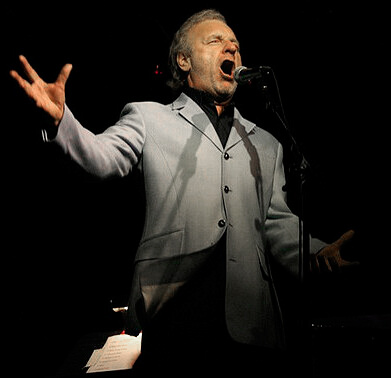
Lyrics: Irish singer-songwriter and activist Paul David Hewson[‘Bono’ Lead vocalist with U2]. Vocals: Irish and Canadian citizen, tenor, singer, musical theatre actor and winner of numerous music awards, the great C. T. Wilkinson.
Colm Wilkinson.
The song “One”, released in 1992 from U2’s album ‘Achtung Baby’, is a deeply emotional and thought-provoking song that explores the complexities of love, relationships, forgiveness, and human connection. Although its beautiful melody may suggest a traditional love song, the lyrics reveal a much more complicated message about hurt, disappointment, and the struggle to understand one another. At its heart, “One” reminds us that being united does not mean being the same, and that meaningful relationships require compassion, acceptance, and a willingness to support each other despite our differences. It is this combination of vulnerability, pain, and hope that makes the song so powerful and enduring.
One
One.
Is it getting better? Or do you feel the same? Will it make it easier on you now? You got someone to blame. You say, one love, one life, One need in the night. One love, we get to share it. It leaves you if you don’t care for it, Oh yes it does, yea. Did I disappoint you? Or leave a bad taste in your mouth? You act like you never had love, You want me to go without. Well it’s too late tonight. Drag the past out into the light. We’re one but we’re not the same. Carry each other, we get to carry each other Oh One! yes we are one. Have you come here for forgiveness? Have you come to raise the dead? Have you come here to play Jesus? To the lepers in your head. Did I ask too much, more than a lot? You gave me nothing, it’s all I got. We’re one but we’re not the same, You see we hurt each other, we do it again and again. Love is a temple, love a higher law. Love is a temple, love the higher law. You ask me to enter but then you make me crawl. I can’t be holding on to what you got, When all you got is hurt. One love, one blood. One life, you got to do what you should. One life, with each other. We are Sisters, we are brothers. One life but we’re not the same. We get to carry each other, carry each other yes. Yea we are One. We are we are one.
This website uses cookies to improve your experience. We'll assume you're ok with this, but you can opt-out if you wish.AcceptRead More
Privacy & Cookies Policy
Privacy Overview
This website uses cookies to improve your experience while you navigate through the website. Out of these, the cookies that are categorized as necessary are stored on your browser as they are essential for the working of basic functionalities of the website. We also use third-party cookies that help us analyze and understand how you use this website. These cookies will be stored in your browser only with your consent. You also have the option to opt-out of these cookies. But opting out of some of these cookies may affect your browsing experience.
Necessary cookies are absolutely essential for the website to function properly. This category only includes cookies that ensures basic functionalities and security features of the website. These cookies do not store any personal information.
Any cookies that may not be particularly necessary for the website to function and is used specifically to collect user personal data via analytics, ads, other embedded contents are termed as non-necessary cookies. It is mandatory to procure user consent prior to running these cookies on your website.





Recent Comments